Marine fisheries of the Alaskan Arctic—pollock, halibut, crab, salmon, and others—represent almost fifty percent of the commercial marine resources of the United States.
Temperatures in the Arctic are rising at more than twice the global average rate, causing profound physical changes in the environment and contributing to feedback loops that lead to further impacts on global climate.
How do you study rapid change in a place like this? Multidisciplinary research programs support long-term moorings and coordinate sample collection across the Bering Sea, Chukchi Sea, Beaufort Sea, and Arctic Ocean.
NOAA’s Ecosystems & Fisheries-Oceanography Coordinated Investigations group (EcoFOCI), a joint research program between the Alaska Fisheries Science Center and the Pacific Marine Environmental Laboratory, maintains four long-term monitoring sites across the Bering Sea.
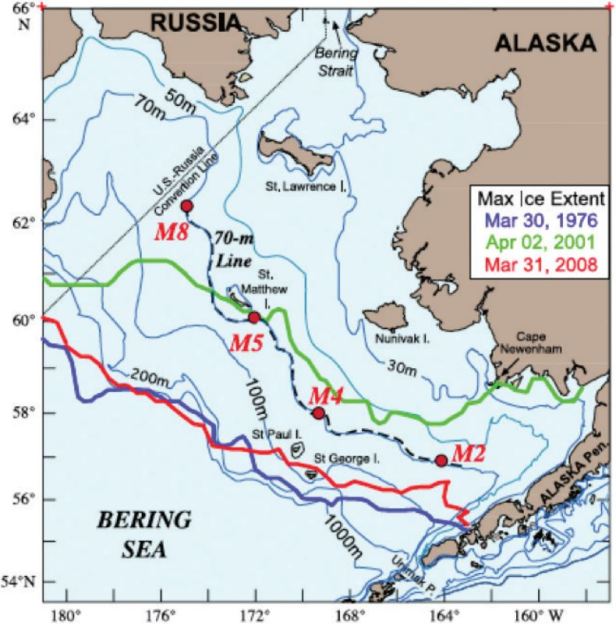
Each of these sites includes an oceanographic mooring, which collects data year-round without relying on research vessels. These moorings have been maintained since 1995 (M2), 1996 (M4), and 2004 (M5 and M8). This month, NOAA Ship Oscar Dyson completed the 2020 mooring work—the 25th year for M2—and collected supplementary data and samples at several stations in the vicinity of each site.
While we were in the area near M8, we also picked up four trawl-resistant moorings with upward-facing echosounders, part of a new project attempting to track pollock migration between US and Russian waters.

Continuing northward, we collected data and samples from five of eight key regions of high productivity and diversity, known collectively as the Distributed Biological Observatory (DBO). The DBO project has established a standardized data collection and sampling protocol for these regions, so multiple scientific investigations can move forward despite the obstacles to routine data collection in this harsh environment.
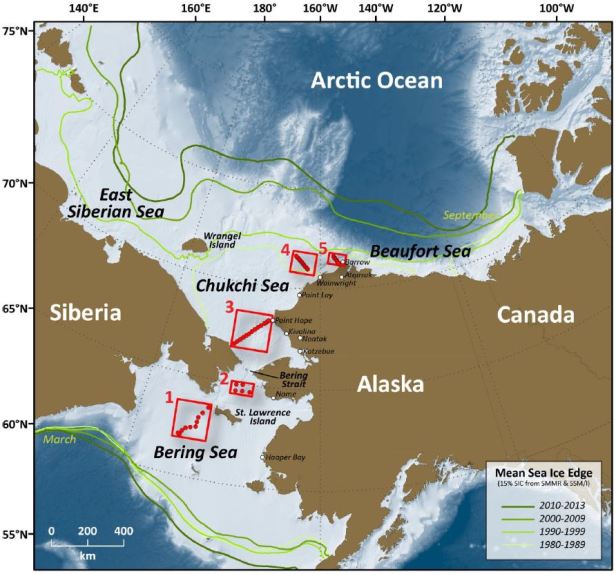
Yesterday, we completed the last station on this Arctic expedition. We’ve collected, processed, and preserved:
- 275 nutrient samples
- 236 chlorophyll samples
- 34 dissolved oxygen samples
- 31 harmful algal bloom samples
- 100 zooplankton samples
- and more
What does that look like?
Step 1: Put the CTD in the water. Keep a critical eye on the real-time data as the CTD moves down through the water column. Stop within 5 meters of the sea floor. Most of these stations are relatively shallow, 70 meters (230 feet) or less, so it doesn’t take long to get there at 30 meters per minute. Close the bottles one by one to collect seawater samples at predetermined depths on the way back to the surface.

Step 2: Before I joined Dyson’s crew, I heard someone describe what happens the moment the CTD is back on deck. “The scientists all come running out to get their samples.” On this cruise, that’s all of us—visiting scientists, survey techs, and anyone else on board who’s available and willing to help.
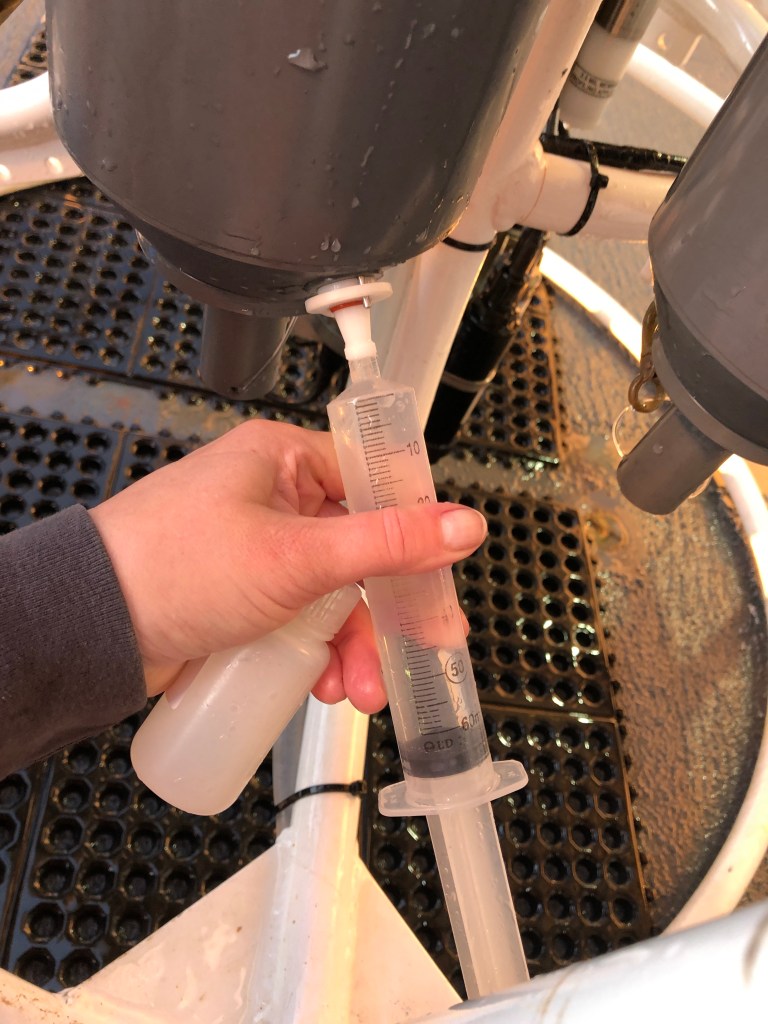
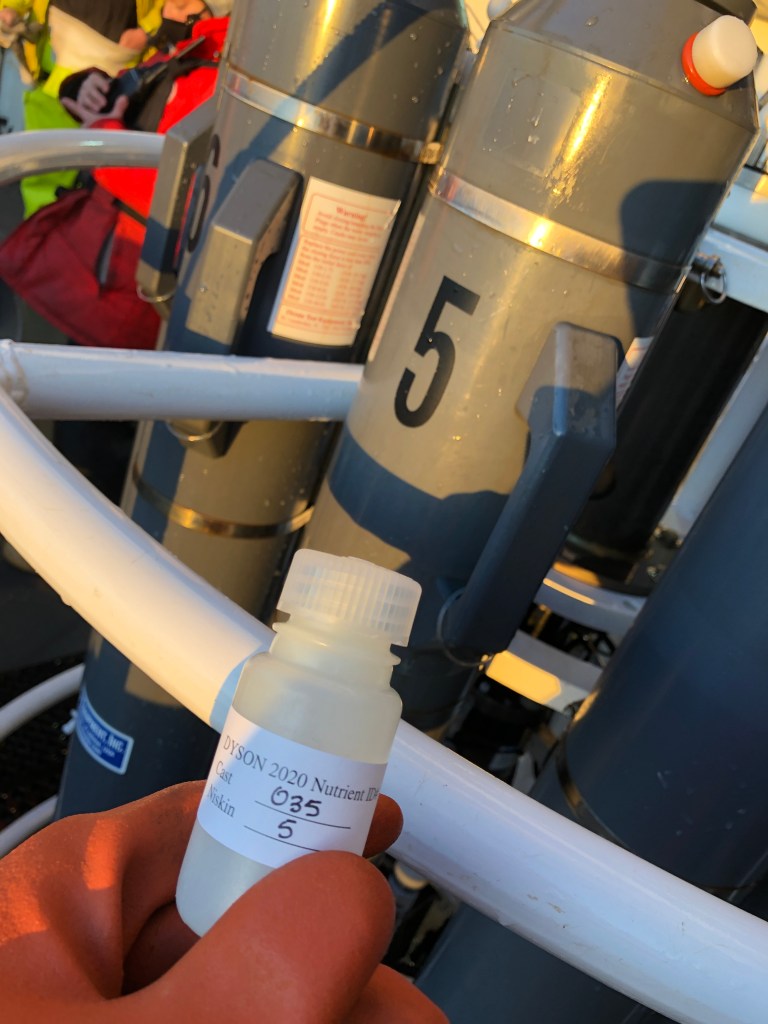
Step 3: Process and store samples.

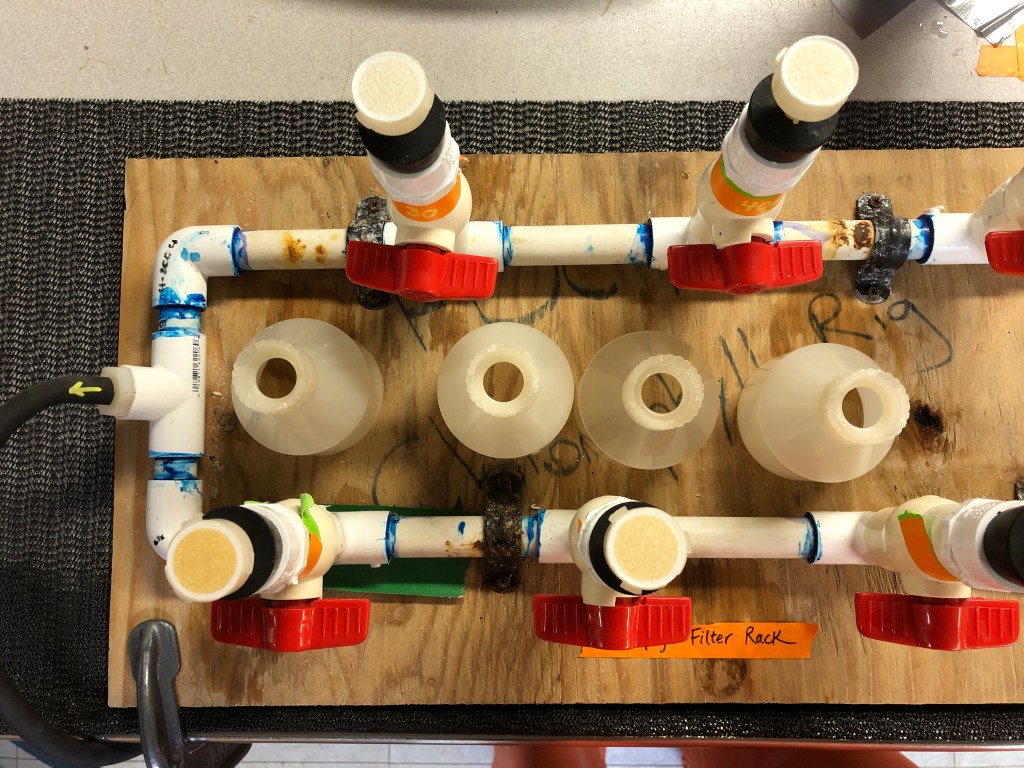
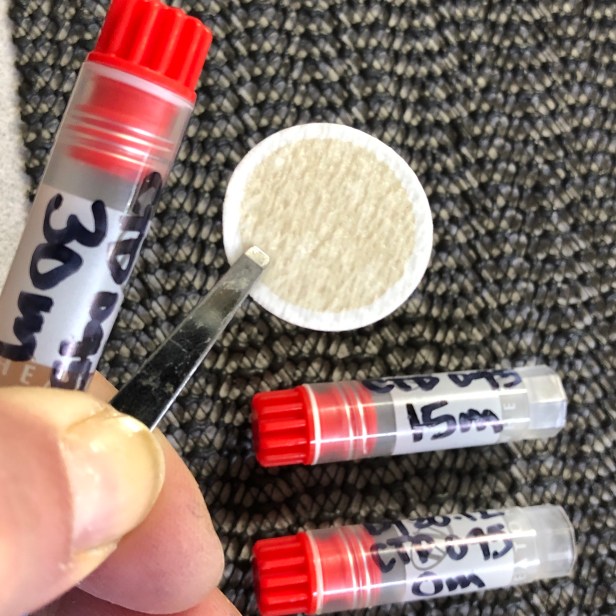
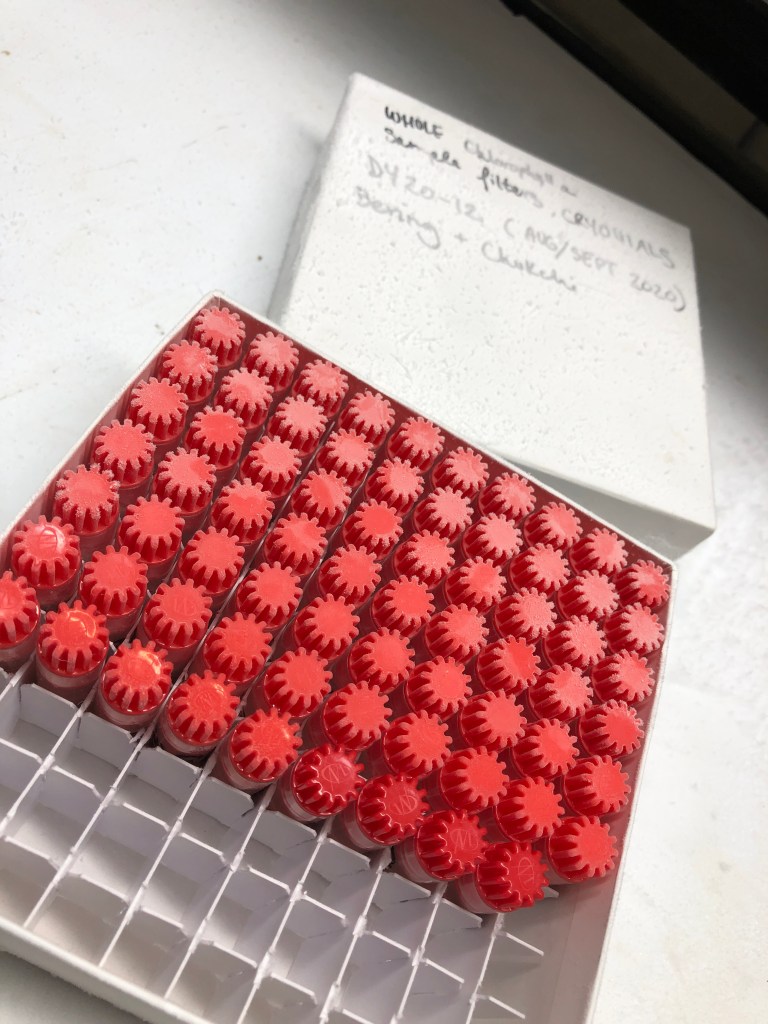
Chlorophyll samples are filtered in the chem lab on board. They are frozen on their filters in the -80˚C scientific freezer.
Step 4: Zooplankton! Use fine mesh bongo nets to collect zooplankton. Oceanographic instruments attached to the bongo also collect environmental data in each location.
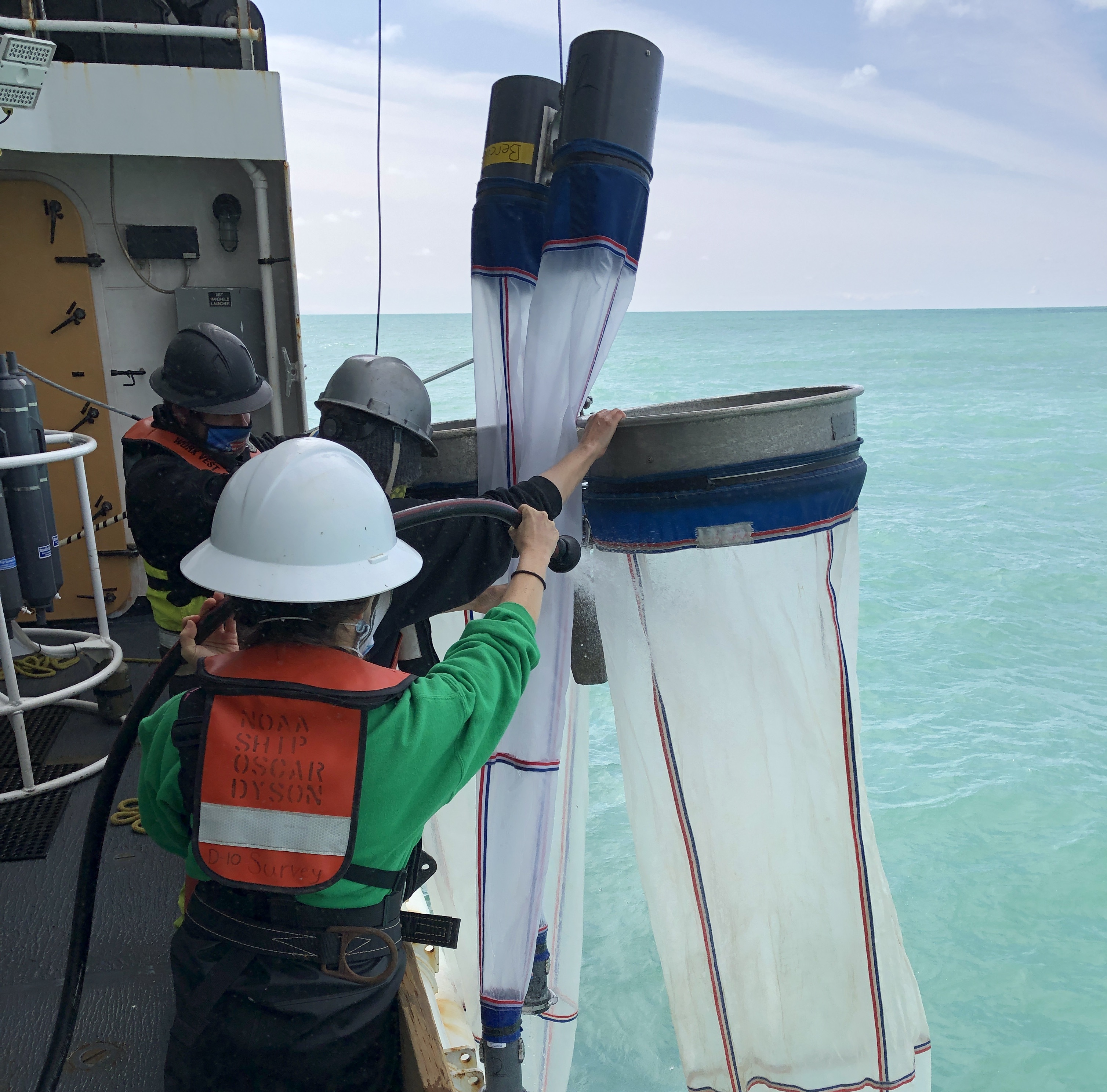

Day: Senior Survey Tech Megan Shapiro, Scientist Catherine Berchok, and Skilled Fisherman Tom Stucki prepare to bring the bongo on deck. Night: The bongo ready to go into the water during night operations.
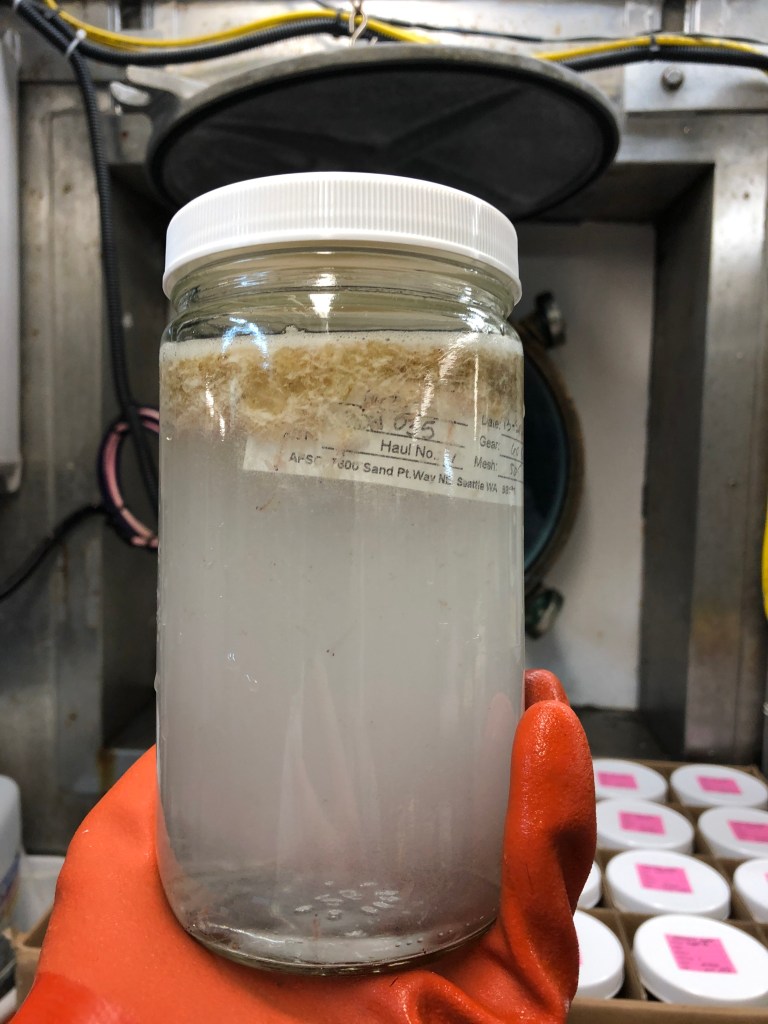
Step 5: Collect, process, and store any other samples on the project plan for each location: oxygen, salts, harmful algae, eDNA…
Step 6: REPEAT! (75 times for CTDs and 50 times for bongos, to be exact!)

Together, the moorings, oceanographic data, physical and biological samples, and hydrophone recordings also from this cruise will help to write the next chapter in the story of a changing Arctic. How will this huge, remote, and uniquely productive marine ecosystem respond to climate change? Water temperatures rise, sea ice retreats, ice algae give way to phytoplankton, marine mammals explore new habitats…
I’m happy to have had the opportunity to help collect these valuable data, and I’m grateful to all of my shipmates who worked so hard to make this happen.

In 2020, research vessels are adapting to new working conditions to prevent the spread of COVID-19, with some ships taking on extra projects or carrying fewer scientists. Every single day of the last month has included an enormous amount of work for all thirty of us on board—scientists, survey techs, deck crew, officers, engineers, and stewards—but we’ve achieved more than we thought possible.
Read more about our project in these feature stories from NOAA Research:

and NOAA Fisheries:

 Spindrift