Tonight, we reached the northernmost point on our Arctic expedition: 72.4 degrees north, 156.5 degrees west. NOAA Ship Oscar Dyson has traveled through the Bering Strait, crossed the Arctic Circle, and arrived in the Arctic Ocean. We are here because of a microphone.
Okay, a hydrophone. We’ll pick up one that’s been suspended above the sea floor at a depth of about 500 meters (1640 feet) for about a year, and we’ll drop a new one in its place.

This is NRS01 in the Alaskan Arctic. It is one of twelve hydrophones (so far) known as the Ocean Noise Reference Station Network, which NOAA began to install throughout US waters in 2014. (In August, we recovered and deployed NRS02 at Station Papa in the Gulf of Alaska.)
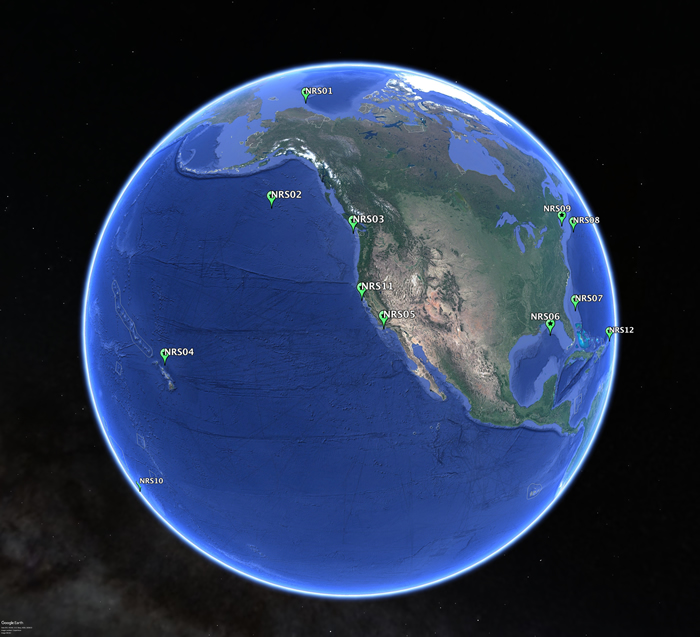
On this cruise, we’re maintaining instruments, recording oceanographic data, and collecting seawater and biological samples from an established network of whole-ecosystem monitoring sites throughout the Alaskan Arctic, one of the world’s most productive marine ecosystems.
Background noise and sounds are important characteristics of the marine environment, and these hydrophones play an important role in understanding baseline conditions and monitoring changes in the soundscape over time.
They record:
- living organisms, like marine mammals
- physical processes, including weather, waves, ice, or earthquakes
- human-generated sounds, such as ship traffic or seismic mapping


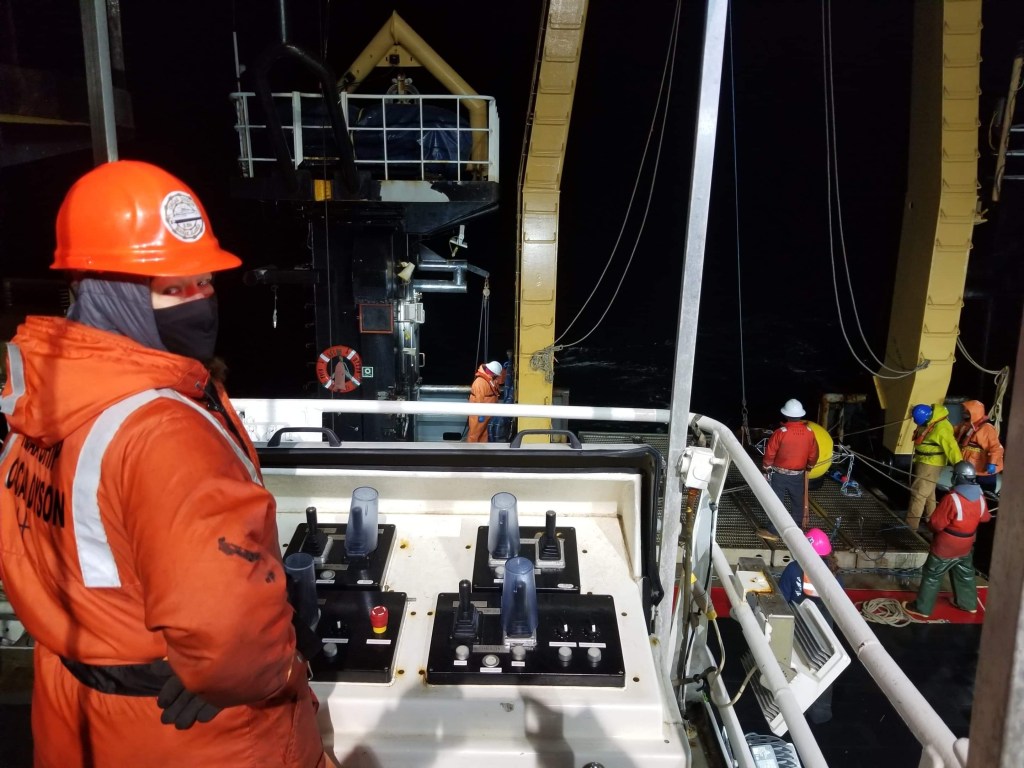
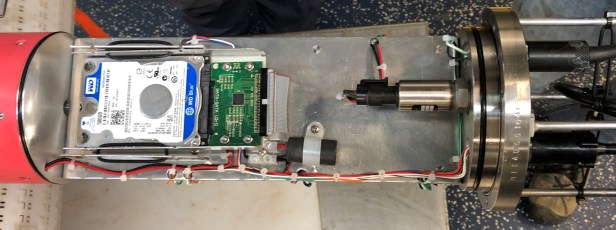
One of the three scientists who sailed with us on this cruise was Catherine Berchok from the Alaska Fisheries Science Center’s Marine Mammal Laboratory. Dyson helped to recover and deploy several of her AURAL hydrophones (Autonomous Underwater Recorder for Acoustic Listening) from known migratory pathways and habitats of Arctic marine mammals throughout the North Pacific, Bering Sea, and Chukchi Sea.



Hear audio clips from NOAA hydrophones here:
Listening To The Sea: Using Passive Acoustic Data to Monitor Ships and Ocean Life
For researchers:
Access to passive acoustic data via the National Center for Environmental information (NCEI)
More information about the NCEI passive acoustic data archive
Other blogs and reports related to these acoustic moorings:
Understanding Sound in the Ocean
NOAA Pacific Marine Environmental Laboratory (PMEL) Acoustics Program
North Pacific Research Board Arctic Program blog about Catherine Berchok and her acoustic mooring work, August 2019
Arctic Whale Ecology Study (ARCWEST), May 2019
Arctic Long-Term Integrated Mooring Array (ALTIMA), 2016 Cruise Report
 Spindrift