Things you might find on a NOAA ship, but not on a commercial fishing vessel:
- indoor lab/work space
- large staterooms with personal storage space
- plenty of space on deck to relax outside and enjoy the ocean
- a lounge with recliners & brand new movies
- a gym
- a laundry room
- spare time to relax on deck, watch movies, work out, enjoy clean laundry
- more than one bathroom
Planning and packing to go to sea felt familiar. This year, I had a much better understanding of what to expect and what I’d need to take with me, but I knew that the experience would be a lot different this time.
The third of five legs of this summer’s groundfish survey started with a four-hour drive south from NOAA’s Northwest Fisheries Science Center in Newport to Brookings, Oregon to meet our chartered commercial fishing vessels, Last Straw and Excalibur. Each boat would have seven people on board: a captain, two commercial fishermen, one night driver, and three scientists.
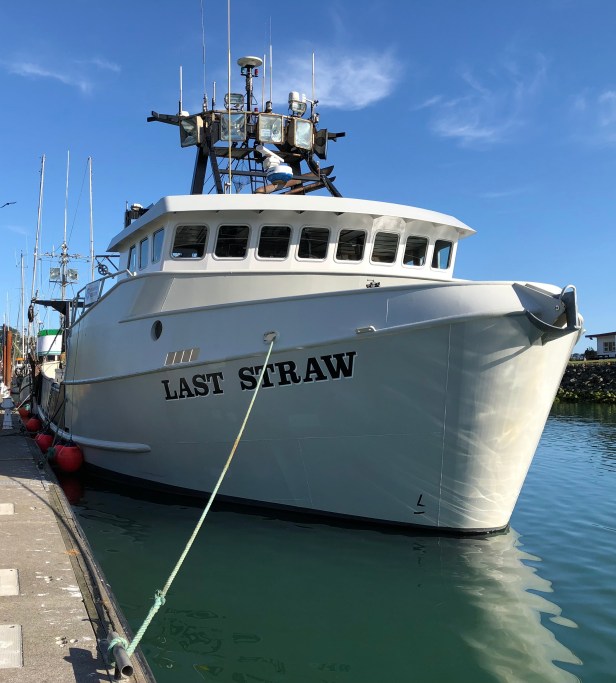
F/V Last Straw is a 70-foot commercial fishing vessel based in Newport, Oregon.
Among the most common types of commercial fishing vessels in Oregon are trawlers like our survey vessels, which help conduct marine research in addition to participating in multiple commercial fisheries. Many boats can be configured for multiple styles of fishing, including midwater or bottom trawling (hake, shrimp, groundfish), hook and line trolling (tuna, salmon), or crabbing (crabs!). These species are Oregon’s largest commercial fisheries. If you’ve visited Newport, you’ve probably seen the fishing fleet at the marina on the historic bayfront.


- Adapted from Getting to Know Oregon’s Commercial Fisheries: Trawlers.
For the survey, NOAA Fishery Resource Analysis and Monitoring Division equips the deck of each chartered vessel with a large table for sorting the catch, plus rugged waterproof instruments and computers for data collection. Large white totes secured on deck contain supplies and equipment for collecting and storing biological samples. A complete set of backup equipment is stored in the fish hold, to keep the survey going if something malfunctions at sea.

Last Straw and Excalibur are among the largest of the boats operating out of Newport, but most of the available space is devoted to fishing. Everyone on board lives together in a relatively small indoor space.


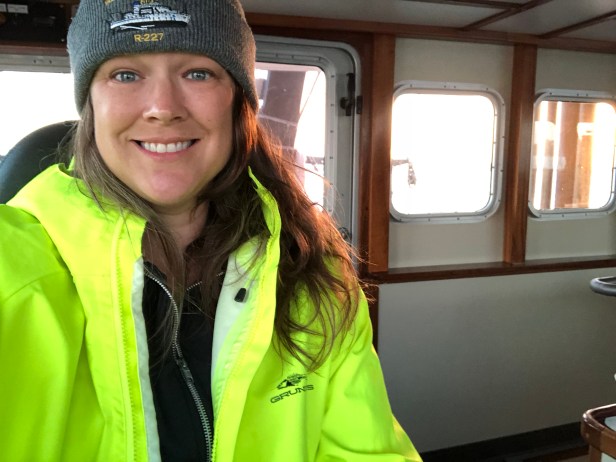
Almost every available storage space was full of food and provisions: refrigerator, walk-in freezer, forepeak, galley cabinets, under the galley cushions…
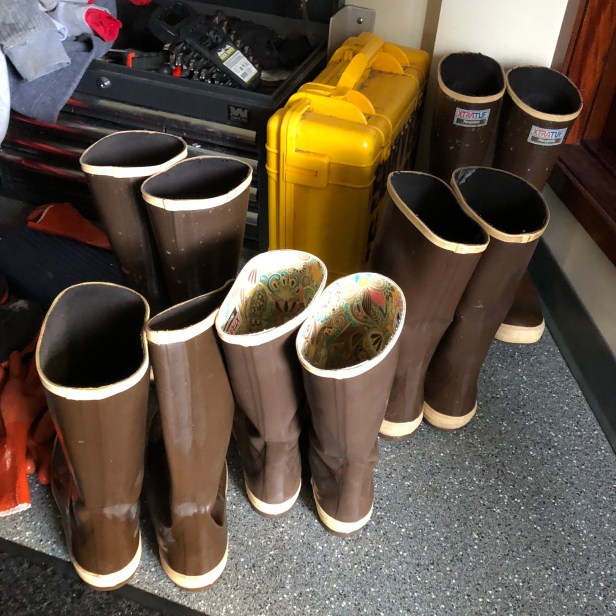
Not pictured: one very small head/shower combo.
We fished from sunrise to sunset on the longest days of the summer. We ate when we had time between tows. I was so tired at night that I usually fell asleep immediately in my little top bunk. Some nights I’d wake up to waves crashing over the bow as we motored to our next station. Some mornings the sound of the winches hauling back the net would wake me up with barely enough time to grab a quick cup of coffee on the way outside to work up the first catch of the day.
Stay tuned for fishing stories!
 Spindrift