While we’re out here for the hake survey, we’re also collecting some basic oceanographic data, including conductivity (salinity), temperature, dissolved oxygen, and chlorophyll fluorescence.
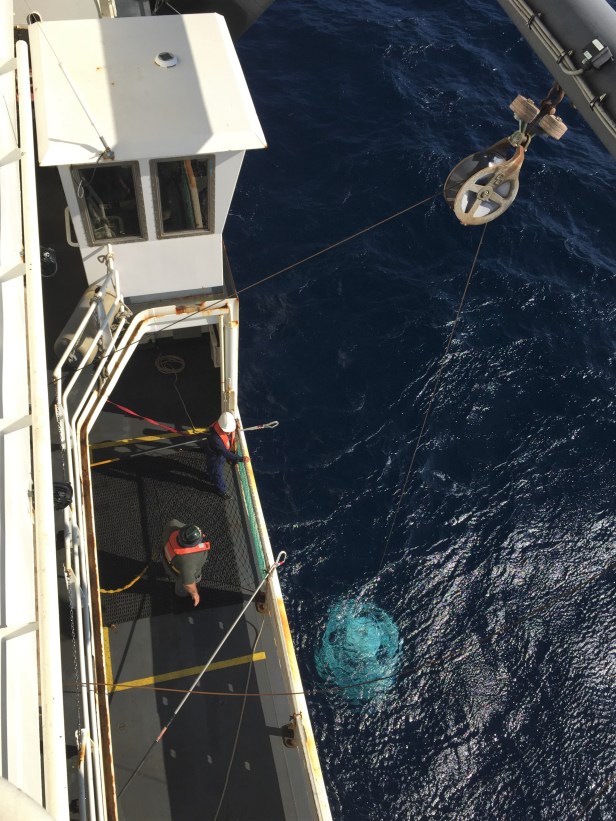
The CTD is deployed and retrieved from the starboard side while the ship is “stopped”–which actually means that officers on the bridge need to constantly adjust the ship’s speed and heading for wind, waves, and current in order to keep the wire angle straight down during each cast.
This CTD (conductivity, temperature, depth) rosette can also be equipped with a set of bottles which snap closed to collect seawater samples from various depths.
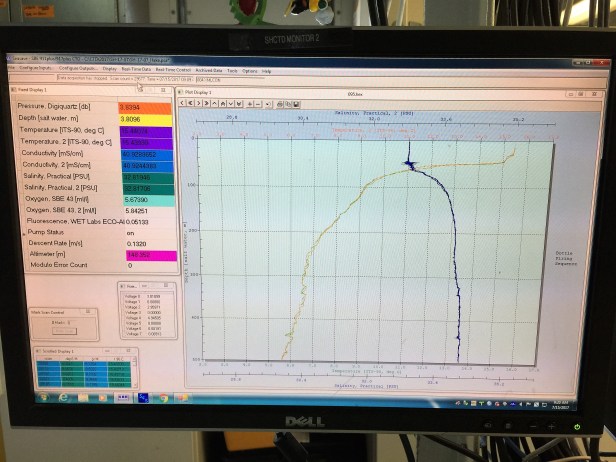
Salinity and temperature profiles from CTDs reveal the position and relative stability of major features like the California Current, a vast and productive coastal upwelling ecosystem. Changes and trends in the California Current Large Marine Ecosystem affect marine habitat, commercial fisheries, climate and human well-being.
Read more about the California Current Large Marine Ecosystem.
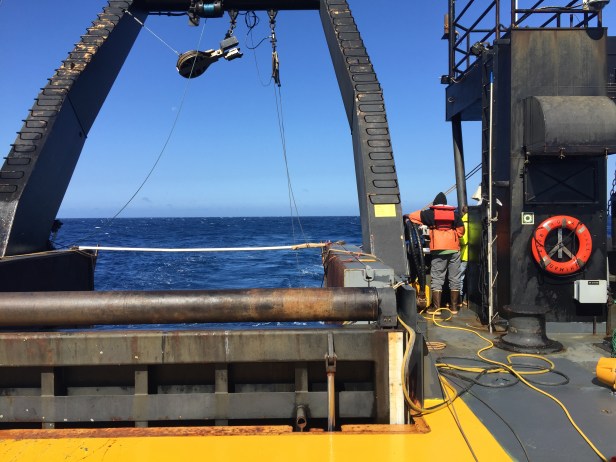
During daytime operations while we’re surveying a transect, we can also conduct underway CTDs.

The underway CTD (uCTD) has spools of line on board and on the instrument.

The uCTD is released straight down from the stern.
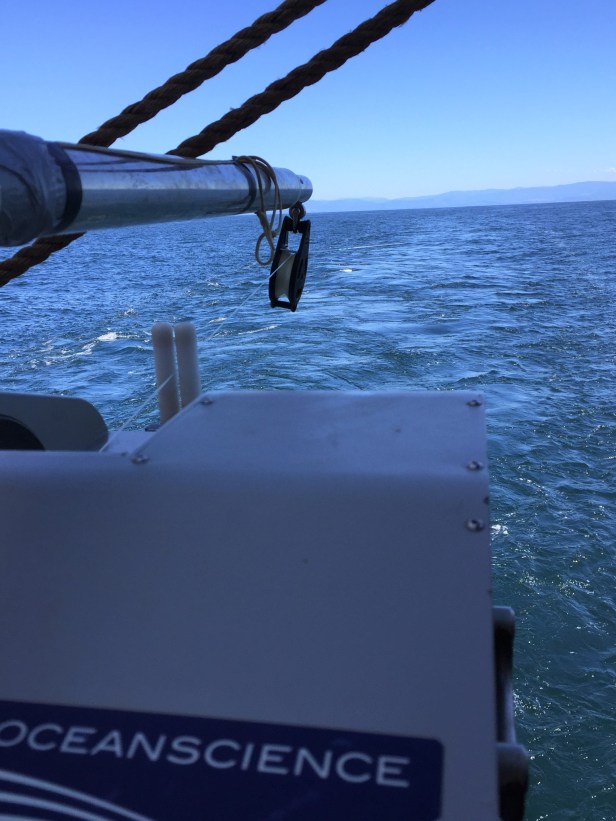
Line spools away from the ship and from the uCTD, allowing a near-vertical descent to the target depth.
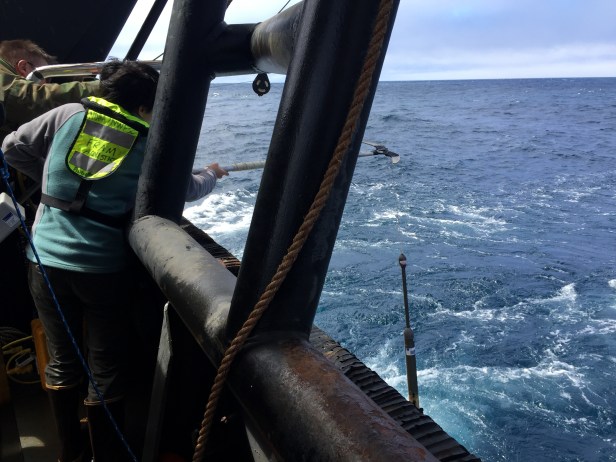
Here comes the uCTD. Data are stored on the instrument and downloaded to the network when it’s back on board.

Some transects also include zooplankton samples, which we have been collecting with a vertical net.
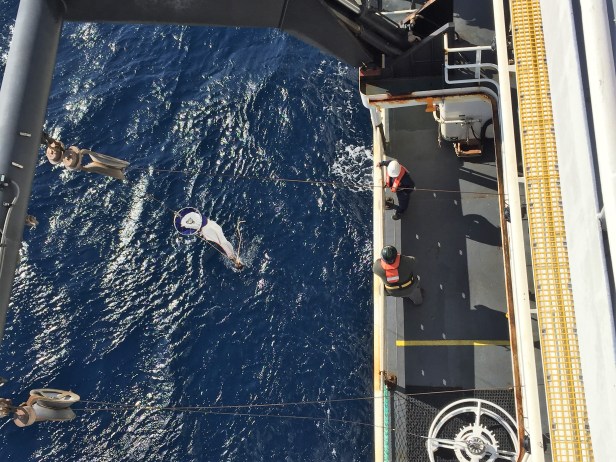
Similar to the CTD, the vertical net is lowered from the starboard side, collecting zooplankton from a column of water on the way back up.

The analog flow meter at the top of the vertical net.
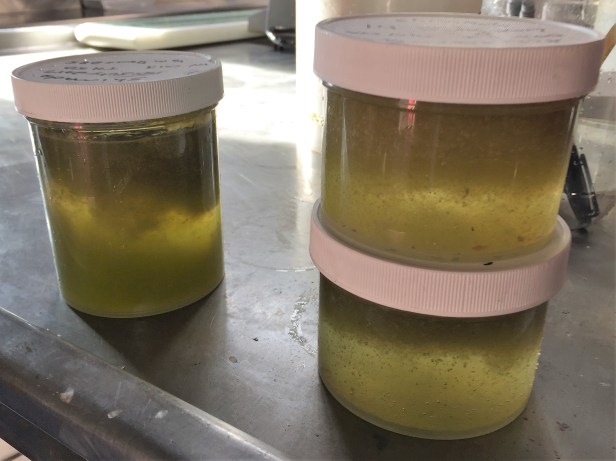
Zooplankton samples from the vertical net, stored for analysis back on land.
 Spindrift