As we’ve moved up the coast from California to Oregon and Washington, we’ve started to see a few other kinds of fish in the net with schools of hake.
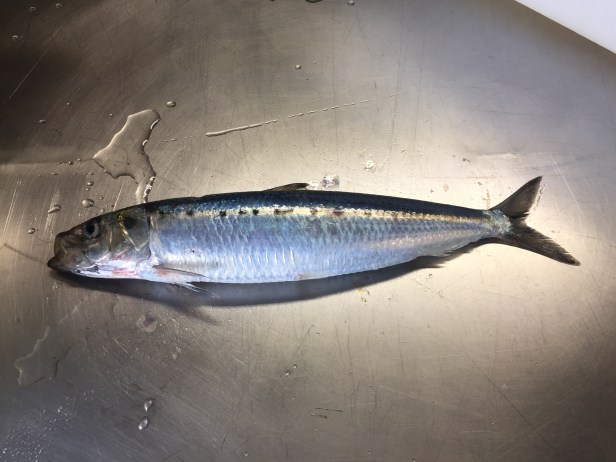
Like sardines!

Anchovies!
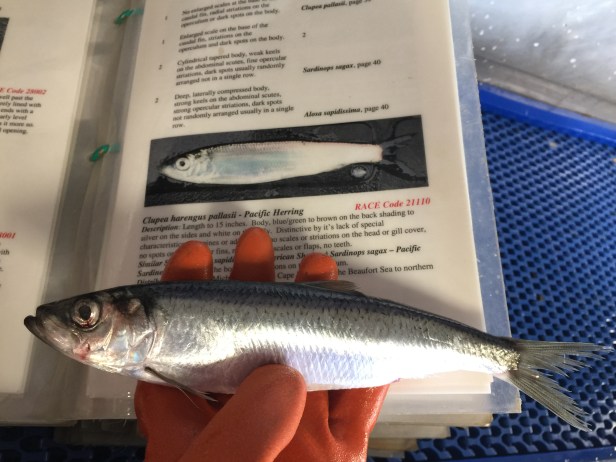
Herring! These will look familiar to my friends at The Marine Mammal Center–we fed a lot of these to our seals and sea lions!
Forage fish like herring, sardines, anchovies, and other small planktivorous fish play an important role in marine food webs that support protected marine mammals and larger fish like tuna and salmon. Many forage fish species are unregulated and there are unanswered questions about the sustainability of commercial fisheries that increasingly harvest them for human use as animal feed, fertilizers, processed food ingredients, and other goods. Biological samples from our survey will be delivered to the University of Washington for further research.

Among the other interesting things that have turned up recently: this large jellyfish, which we tentatively identified as a lion’s mane jelly.
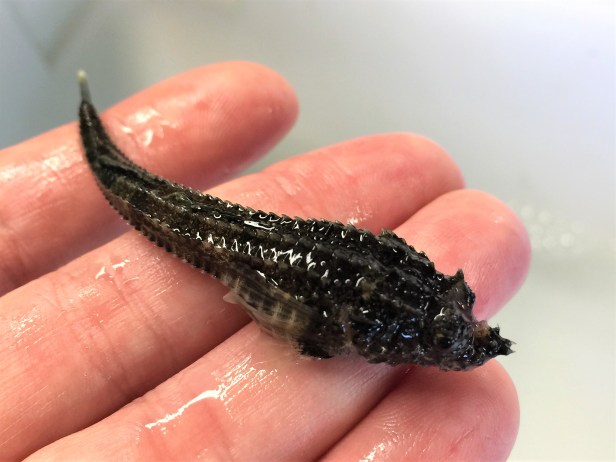
One tiny armor-plated poacher. This one is a northern spearnose poacher. He was still able to swim despite being caught in the net with a few hundred hake, so we released him. Good luck, little guy!

Brown cat sharks. Twelve of these turned up unexpectedly one day. Several were released alive and the others will go to the University of Washington. They have beautiful eyes, and their skin is so soft!

Deepwater slipskin. Even more experienced volunteers couldn’t immediately identify everything. Thankfully we have plenty of reference material to help with some of these unusual ones.

Pompano. I love this one! That face!
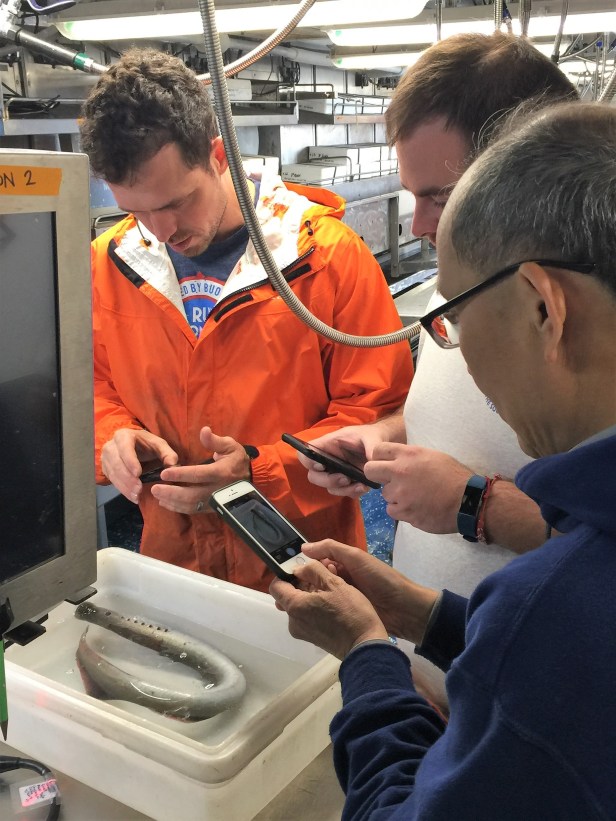
Many of the hake we caught had lamprey bites, which we photographed for a related research project. We only caught one lamprey the entire time, and it attracted a lot of attention!
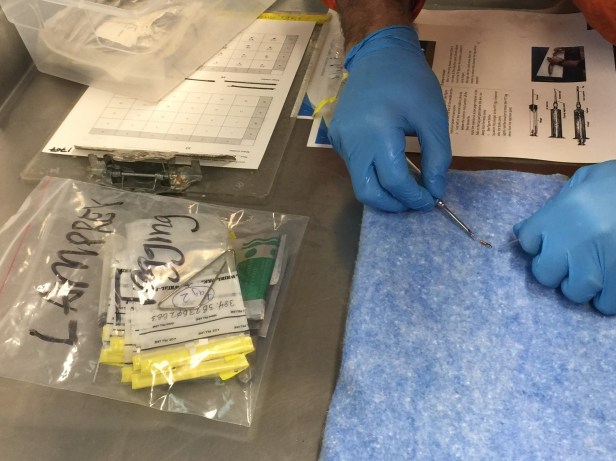
The lamprey got a tag under its skin and was still pretty lively when we released him. Lamprey are anadromous, so this one could turn up in the Willamette or Columbia River!
I’ve really enjoyed learning about related research projects and having the opportunity to contribute to the field work while we are out here.
 Spindrift