It’s the moment we’ve been waiting for. What will we find in the net?!

Fish usually come into the lab on this conveyor belt.

Time to sort out everything-that’s-not-hake and try to figure out what it is.
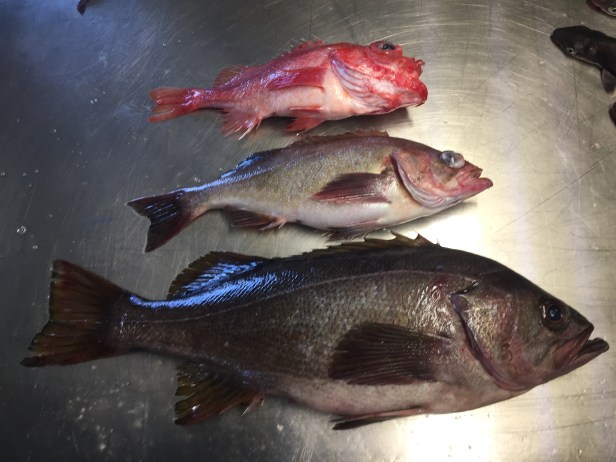
Rockfish. (From top to bottom, these are splitnose, widow, and yellowtail rockfish.)

Sharks! Baby spiny dogfish.

Squid! Some small…like this boreal clubhook squid.

Some LARGE! Robust clubhook squid. Bonus: when there’s something interesting in the lab, crew and officers come to visit! This one was watching us and feeling our fingers with its suckers until we released it.

Sometimes, little ones don’t make it out of the net, like these hatchetfish. We’ve also seen lots of myctophids and a few viperfish.

Some are rare, so we watch for them and take samples for other research projects when we’re lucky enough to find one.
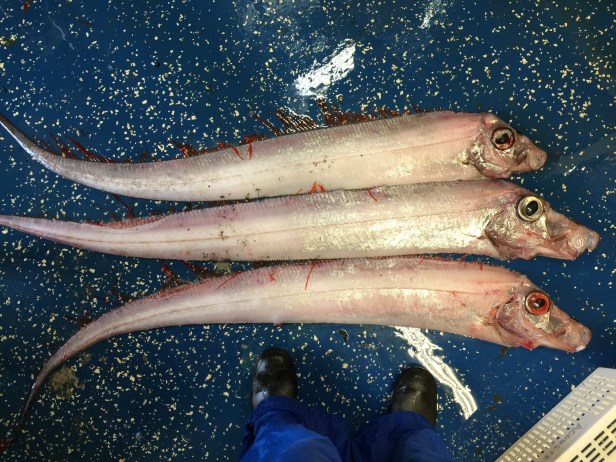
Large and strange, king-of-the-salmon.

When in doubt? Look it up. Or even better, ask an experienced person!

Some of this stuff is pretty weird!
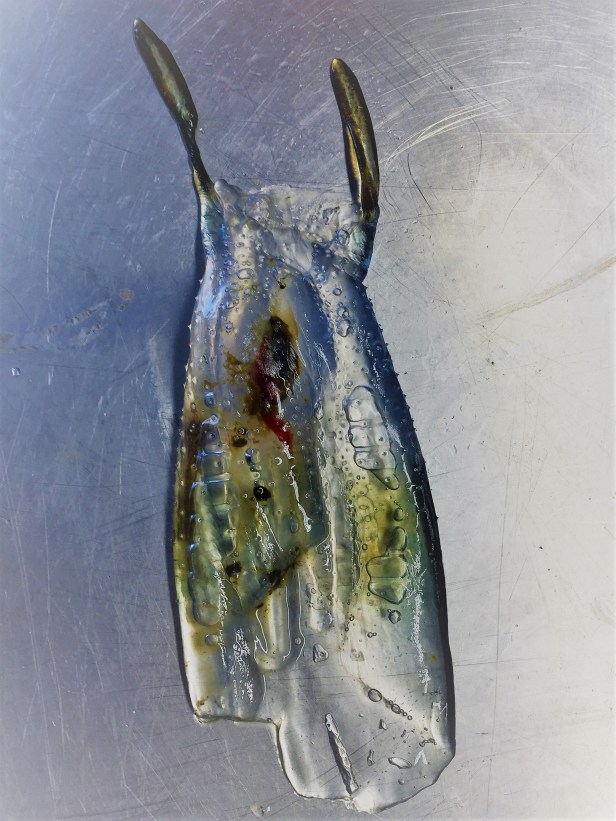
Not kidding. Super weird.

Once we’ve identified and recorded the rest, it’s on to the hake. SO MUCH HAKE!
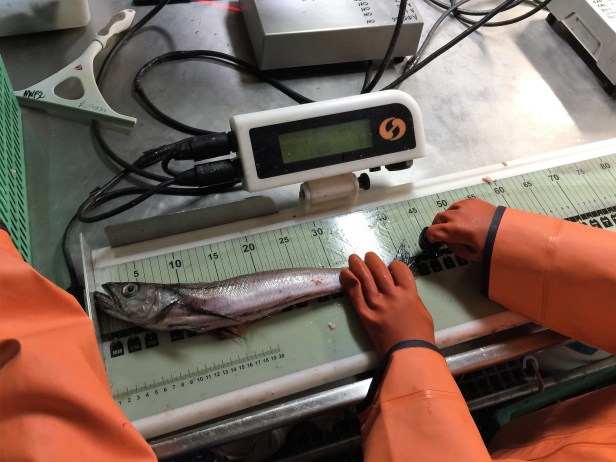
Gender, length, weight.

Otoliths! These are calcium carbonate structures from the inner ear, which are analyzed later in a lab on land to determine the age of each fish.

So many otoliths! Usually 50 pairs every time we fish. We’ve all become experts at finding and extracting these.

The messy work we do for science!!
 Spindrift