My journey as a volunteer at The Marine Mammal Center (TMMC) started with a rescue and response class. We put knee pads and helmets on interns, practiced catching them in nets, and herded them into large animal carriers.
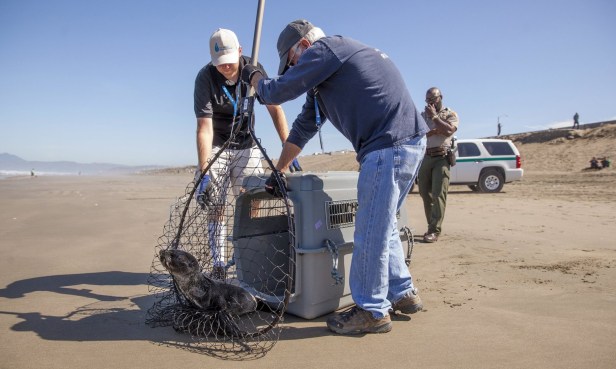
It wasn’t long before I realized that I wanted to be more involved in the work at the center, so I took an animal care class and joined the Sunday night crew at TMMC’s main marine mammal hospital in Sausalito.
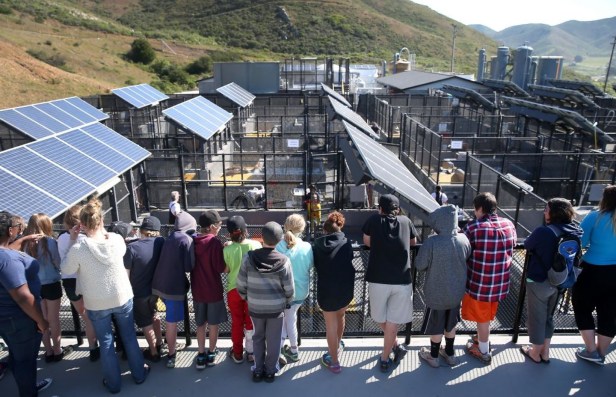
Sometimes our patients have injuries, like shark bites, gunshot wounds, or entanglements with fishing gear. Some have illnesses, like cancer or exposure to domoic acid. And many have been discovered as abandoned pups, which can’t yet survive on their own in the wild.
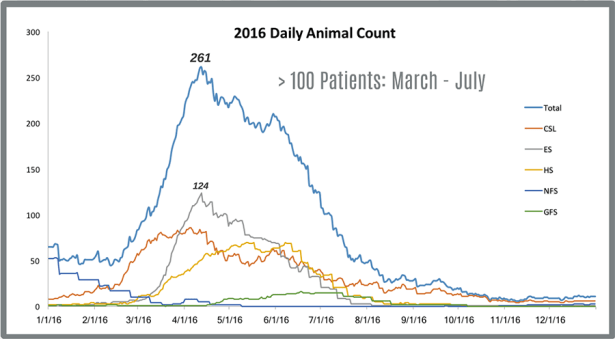
The facility is busiest during the spring and early summer. By numbers, most of our patients are California sea lions and northern elephant seals. There is also a separate harbor seal hospital on site in Sausalito, where specially trained volunteers care for comparatively small and adorable harbor seal pups. The center also accepts fur seals, and is adding capacity to care for sea otters when the Sea Otter Research and Conservation (SORAC) program at Monterey Bay Aquarium has reached capacity and can’t accept any more animals.

California sea lions are otarriids, or “eared seals”, which can be identified by their outer ear flaps and strong, flexible rear flippers which can rotate forward to make them fast and agile on land. They’re smart and mischievous, watching your behavior and looking for opportunities to surprise you.

Northern elephant seal pups are bigger (80 pound babies!) and slower than sea lions. They are phocids, who are agile in the water but move slowly by scooting on their bellies on land. Their behavior is more predictable and they’re less able to make sudden movements, so new animal care volunteers start working with elephant seals first.
Most of the work on an animal care crew is all about the fish. Daily feeding and medication orders from vet staff are posted in the fish kitchen. The crew works together to mix formula and fish milkshakes in giant blenders for tube feeding the youngest pups, hide prescribed medications inside “med fish” for certain individuals, fill small buckets of perfectly-sized fish for young seals learning to eat solid food, and weigh large buckets of fish for groups of animals learning to compete with each other for food.


When very young animals come to the center before they’re weaned and able to eat whole fish, they’re fed a mixtures of milk matrix, water, and fish oil appropriate for their stage of development.
Read more about feeding and nutrition on TMMC’s website.
Pups that are getting formula or electrolytes are fed using a method called tube-feeding. One person restrains the animal while another inserts a soft, flexible feeding tube down the animal’s esophagus and into its stomach. A volunteer then uses a large feeding syringe to deliver the formula down the tube into the animal’s stomach. The entire process takes about five minutes.
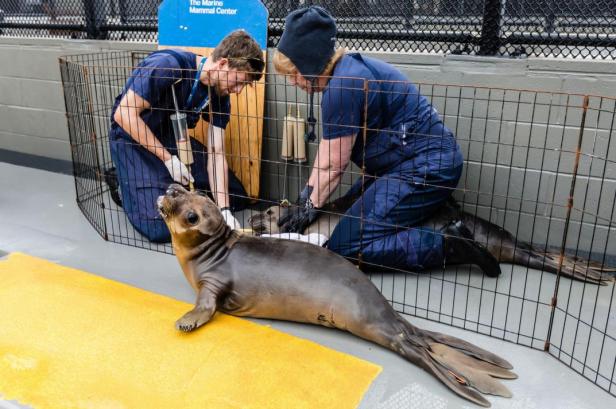
Learn more about the fish kitchen and the animals’ diet in this video:
There are almost unlimited opportunities for TMMC volunteers to learn, on the job or in a classroom setting thanks to the training offered at the center. After a year of volunteering at TMMC, I had completed courses in animal husbandry, medications, rescue and release, and large whale disentanglement.
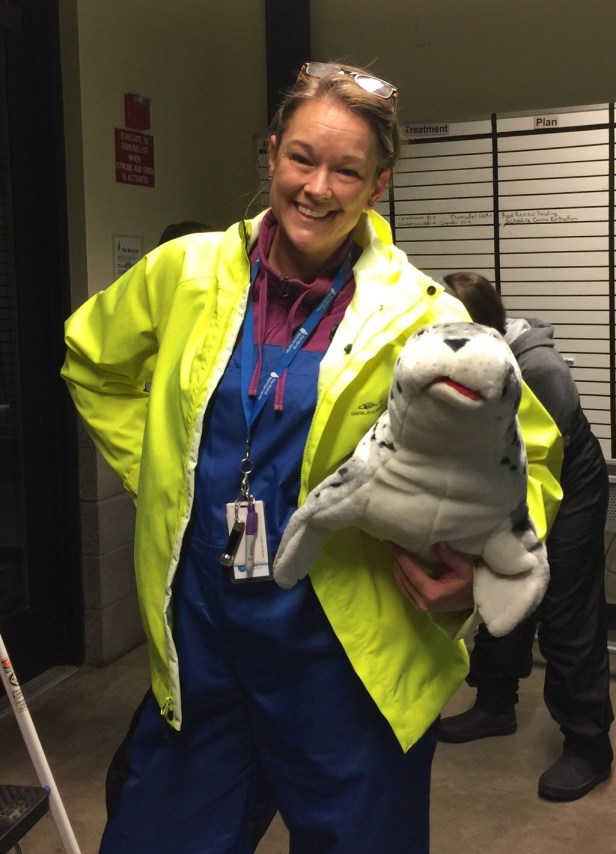
Many crew supervisors and fellow volunteers have decades of experience working with wildlife, in various roles at TMMC and some in professional positions at the Oakland Zoo or San Francisco Zoo. It was incredibly rewarding to work together and develop friendships with other dedicated volunteers, especially during long and sometimes stressful hours feeding hundreds of animals in the busy spring season, and on release days when we could enjoy the rewarding experience of watching our patients return to the wild.
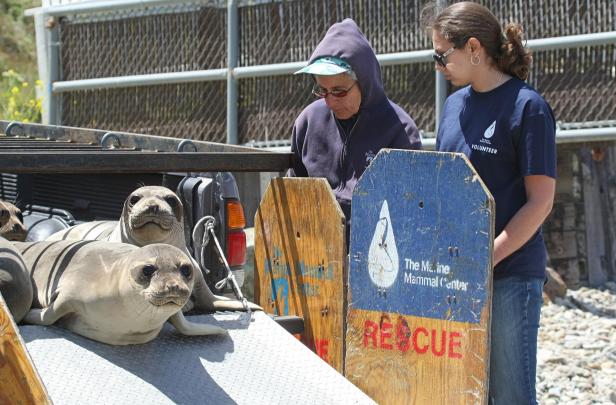
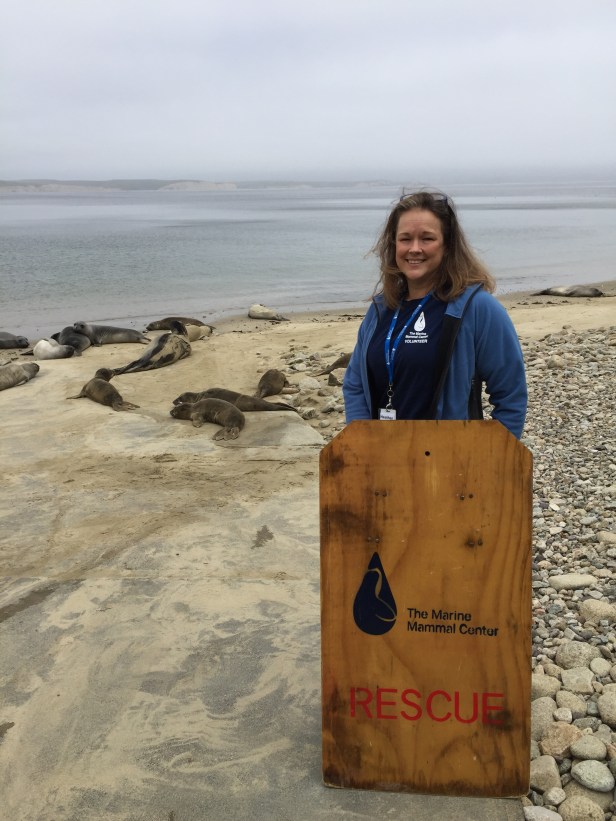
In 2016, the Sunday night crew was selected to assist with the release of three sea lions on Rodeo Beach near TMMC’s main hospital during a large fundraising event (see video below), and we also had the opportunity to interact with TMMC donors and share our stories about how rewarding it is to work with these fascinating and charismatic animals.
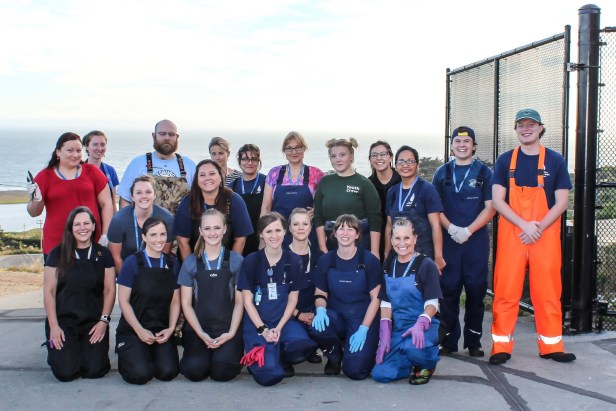
The Marine Mammal Center is open to the public every day except Thanksgiving, Christmas, and New Year’s Day. Stop by for a visit, or consider volunteering!
 Spindrift